Spirits & Tradition
Froth, Fire, and Fermentation: The Long Story of Feni
A GI-tagged spirit older than the Portuguese, tasted with your feet in a freshwater spring: how Goa's Feni is made, and why it endures.
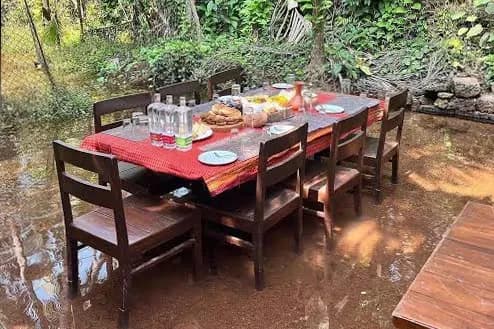
For most, Goa is a winter escape with its scenic beaches and surf schools, and for others it is an off-season escape. The state draws us with its rain-washed forests, fuller streams and a lush green that makes Goa feel renewed.
The Floating Feni Experience
Our visit to Goa this time took us to the Floating Feni Experience - The Table in the Water at Fazenda Cazulo, hosted by Tyson Da Cunha.
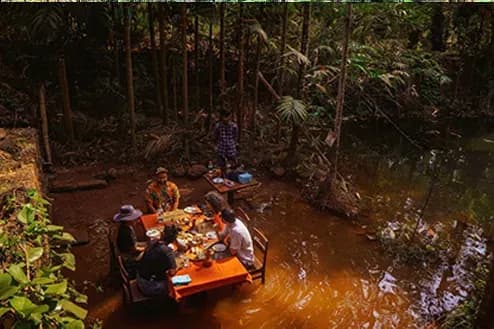
This experience begins with a walk through the farms and distillery, offering a hands-on introduction to Feni, before moving into a guided tasting of Cashew, Coconut and Dukshiri Feni, alongside an array of Feni cocktails. It is in the tasting that Feni begins to tell its story - through its aroma, its strength, its texture and, ultimately, its sense of place.
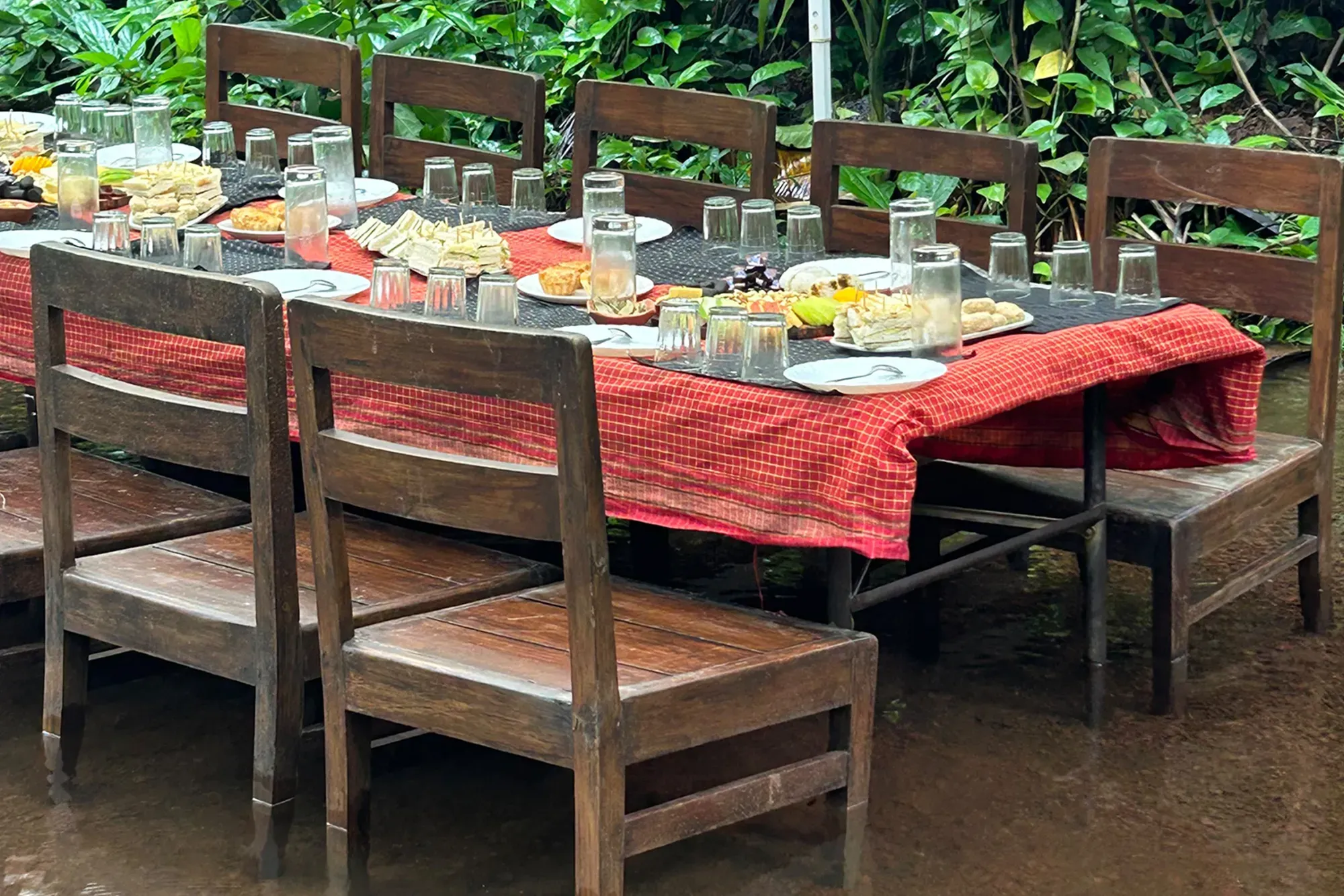
From there, the experience leads to a natural freshwater spring, where a table awaits beneath a canopy of trees. Cold water flows around your feet, while the occasional fish brushes past your toes, making the tasting immersive in every sense (quite literally, too). A curated platter of Goan sweets and savouries completes the setting, pairing the flavours of the region with the sight, aroma and taste of Feni.
Why Feni Matters in Goa
Feni is GI-tagged to Goa, which makes it even more important to understand why it holds a special place in the State. Tyson adds, “Long before the word “Feni” appeared in written records, Dutch traveller Jan Huyghen van Linschoten, in his account Itinerario, described a distilled beverage from Goa, though he did not call it Feni by name. That absence is telling. It suggests that distillation existed here long before the Portuguese arrived, even if the name came later.”
Before Feni took the form we recognise today, there was Sur, or Surah, a fermented palm toddy that was later distilled into something stronger. In that humble precursor lies Feni's true origin story: not as a colonial invention, but as an evolution of something ancient and deeply rooted in the Goan life.
Cashew Feni's story, however, is tied to Portuguese-era agricultural exchange. When cashews, native to Brazil, reached Goa through Portuguese trade routes around 500 years ago, they changed the landscape of Goan food and drink and eventually became central to the production of Cashew Feni.
Even the name “Feni” hints at its character. It is linked to the Konkani word “phen,” meaning froth, and the Sanskrit “phena,” referring to the delicate bubbles that rise when the spirit is poured or shaken. Yet beneath that lightness lies a potent spirit, one to be savoured slowly and thoughtfully.
How Feni Is Made
It starts with the cashew apple, ripened by the Goan sun and heavy with juice. The fruit is never plucked; it is patiently gathered from the ground, where it falls when it is ready - the first quiet step in the making of Feni.
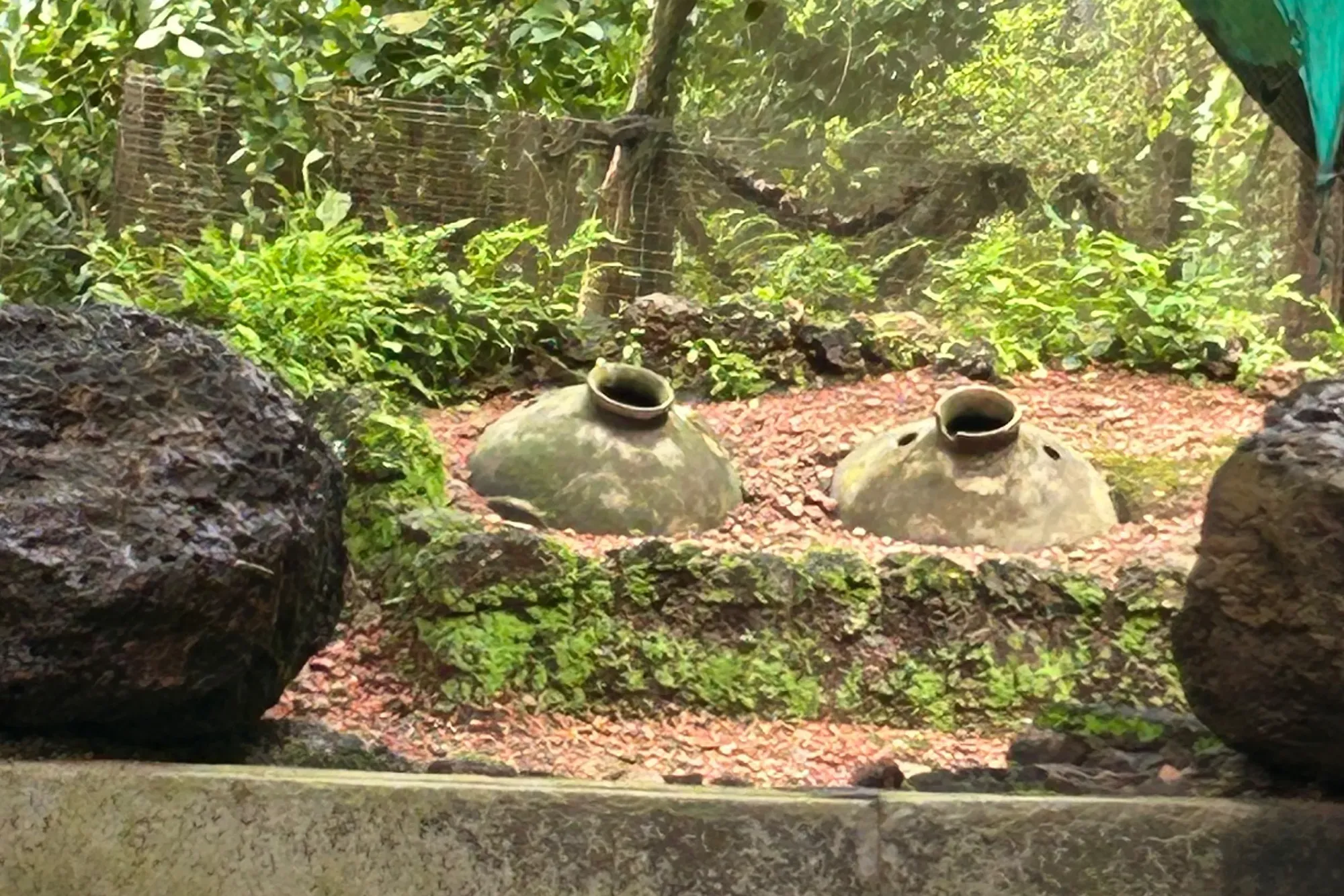
Once the cashew apples have fallen, they are crushed to release their juice, neero. Traditionally, the fruit was crushed underfoot, while today a pulper often does the work. The juice is then left to rest in earthen pots, once buried in the ground to keep them steady and cool. Over three to four days, fermentation quietly works its magic, transforming the sweet juice and laying the foundation for what will become Feni. Today, those traditional pots are increasingly being replaced by drums.
From there, neero meets the fire. In a copper vat known as a bhann, the fermented juice is heated until its vapours rise, travel through water-cooled pipes and return as liquid. This first distillate is a lighter spirit called urrak, with around 25% alcohol.
But Feni takes one more turn through the still. The urrak is blended with fresh neero and distilled again, gaining strength with the second distillation. What emerges is Feni, born from fruit, fermentation and fire, and shaped by a craft that has endured across generations.
Feni Today: Revival, Ritual, and Identity
Feni has survived because it is more than a relic of the past: it belongs to harvest gatherings, festivals, family rituals, folk memory, and the everyday pride of Goan identity. It has long carried associations with warmth, digestion, and simple home remedies, though these are best understood as cultural practices rather than medical claims. Its modern identity has also been shaped by the families and distillers who brought Feni from household traditions into public recognition. Their story takes us from Hansel Vaz of Cazulo Premium Feni and the Macwan-Valentine family behind Big Boss to Guru Dattaram Bhakta, credited with securing Feni's GI tag; Hendrix of Fidalgo, who pioneered its commercial bottling; and Tukaram Haldankar of Kazulana, whose life reflects the traditions of toddy tapping and distilling.
Around them, tradition has continued to evolve: stone mills have given way to mixers, foot-crushing to mechanical crushers, matchsticks to lighters, coconut shells to steel vessels, and makeshift harvest tools to modern ones. Yet at its core, Feni remains unchanged: cashews are still gathered only after they fall, the spirit still depends on wild fermentation, and true Feni still rests on double distillation.
Not as a colonial invention, but as an evolution of something ancient and deeply rooted in Goan life.
Source: Reported at the Floating Feni Experience, Fazenda Cazulo, Goa.