Food & Foraging
The Vanishing Fern: Chasing Aakur Through Goa's Marshes
Every monsoon, foragers wade into Goa's khazans and riverbanks for the tender shoot of a mangrove fern most outsiders have never heard of. It is a harvest bound up with caste, kitchen and a disappearing riverbank.
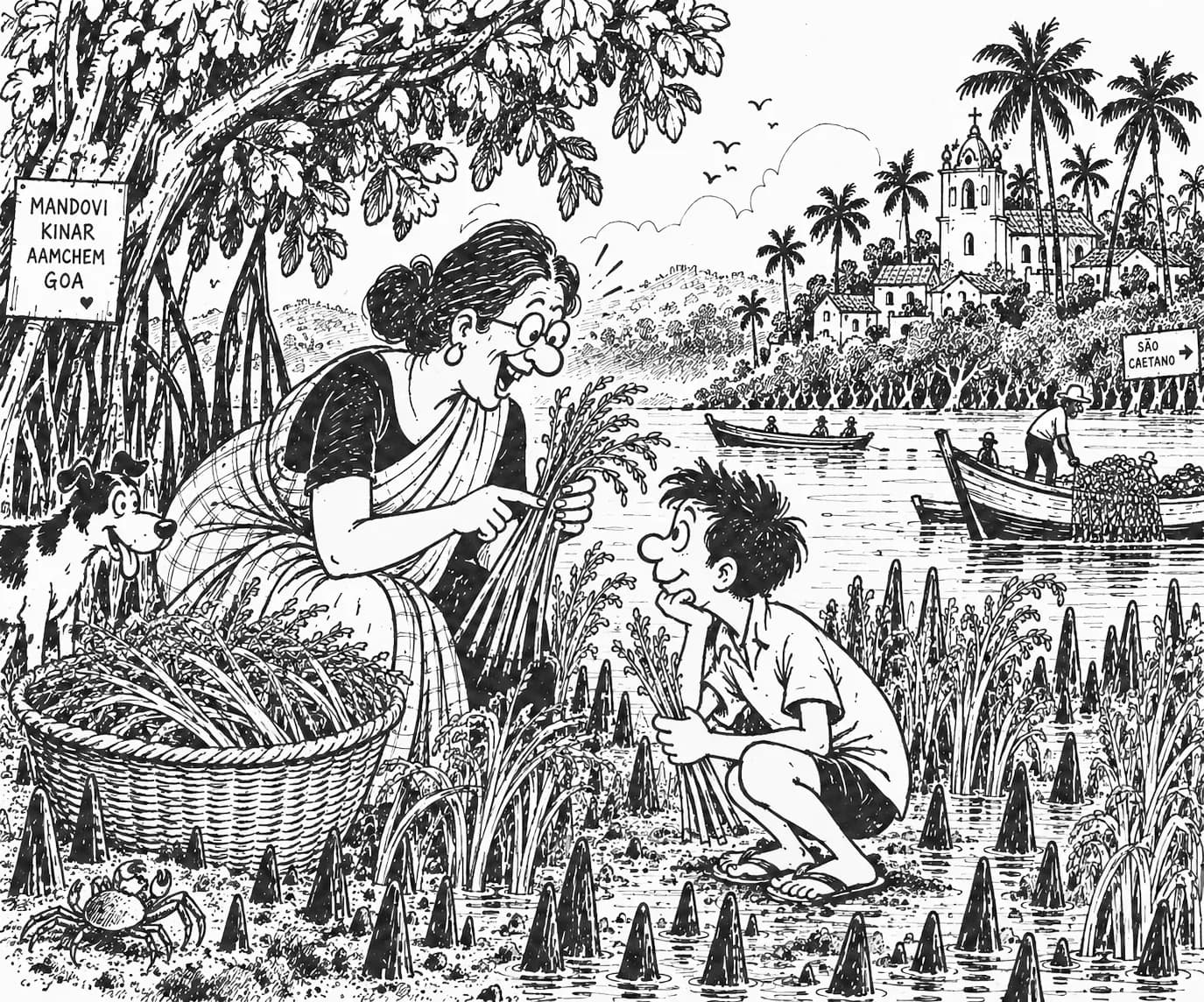
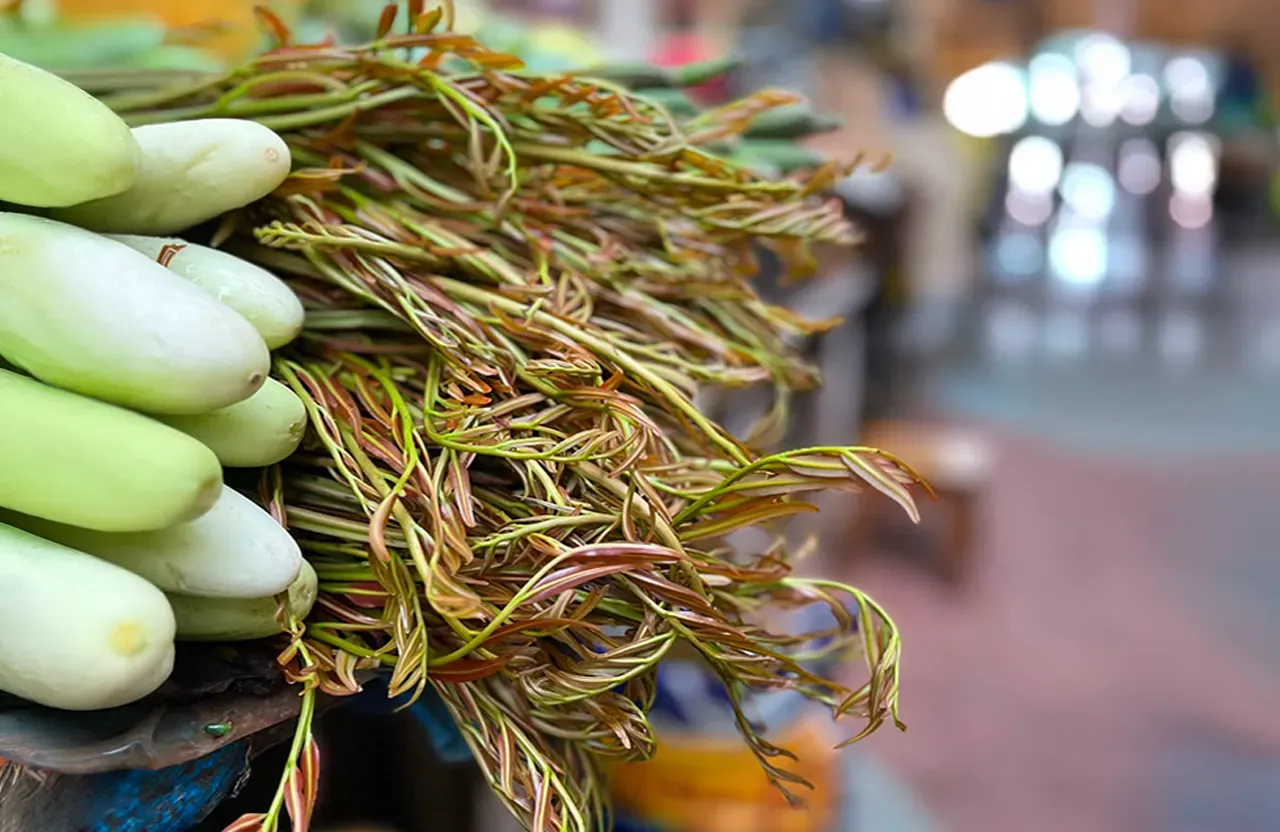
Every June, when the first heavy rains soften Goa's red laterite soil and swell its rivers, an unadvertised harvest begins. Along the banks of the Kushavati near Sanguem, and in the mangrove creeks further north of the state, people wade into the mud looking for one specific thing: the tender, still-curled shoot of a fern that most outsiders have never heard of, and that many Goans themselves only half-remember. They call it Aakur. The name simply means “shoot,” and for a few weeks each monsoon, in certain corners of the state, it's one of the most prized things you can put on a plate.
What Aakur actually is
Botanically, Aakur is Acrostichum aureum, the golden leather fern. It's a large, glossy plant that colonises marshy, brackish ground across tropical areas. It is, in effect, the earliest growth of a mangrove system. Home cook Shubhra Shankhwalker, who first learned to identify it on market trips with her mother-in-law, describes it simply as the initial sprout of the mangrove, which is why it carries the name “mangrove fern.” It grows wherever young mangrove is establishing itself, along creeks, wherever the water sits still enough for it to take hold.
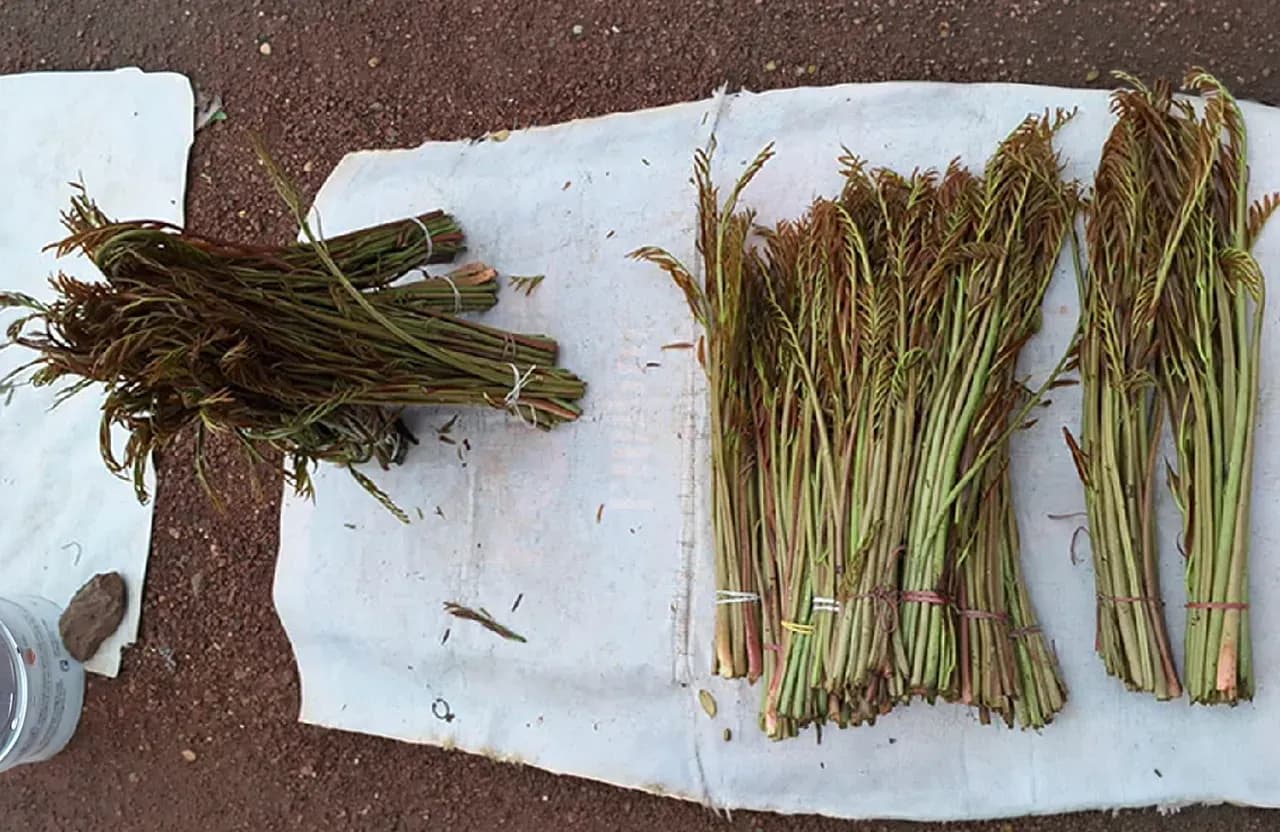
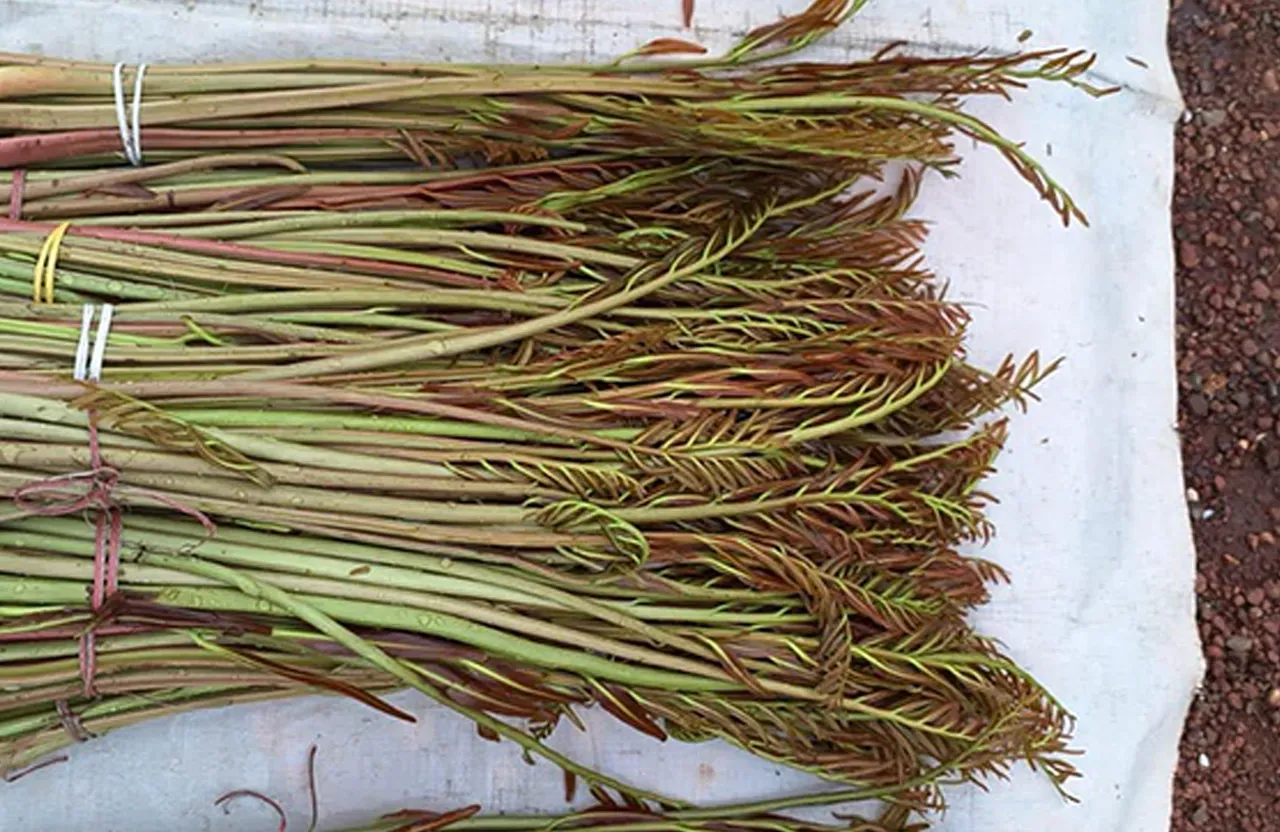
The mature plant is left alone. What's harvested is the shoot: fresh, green, and tender, picked well before it toughens. According to Hansel Vaz, who forages Aakur along the Kushavati River in South Goa, the window for picking is narrow and gauged entirely by feel. A shoot is ready when it's still green but carries a faint brownish line through it, and is judged not by sight but by how much usable, tender stem, roughly half a foot, can be taken from it. Picked too early, there's no texture at all worth eating; left too long, it turns fibrous or even faintly slimy. There are no tools involved. It's simply snapped off by hand. Shubhra adds a practical caution: the shoot can leave a slight itchiness in the throat if the outer layer isn't scraped off first, though nothing as pronounced as the itch of colocasia.
A fern of two geographies
Aakur is not, it turns out, a pan-Goan monsoon staple. The fern belongs mainly to the north and it's rarely found further south, and southern Goans travelling north are increasingly asked to bring some back, almost as a gift. It shows up, when it's available, in Mapusa and Panjim markets, and more recently in Margao market too. Further inland, toward Cotigao, the foraged basket changes entirely, filled instead with wild greens that don't make it to a market stall at all.
Hansel has a completely different take on this. For him, Aakur is unmistakably a South Goa fern, bought reliably outside Chandor near the church, from tribal women who collect it fresh from the riverside at Sanguem, along the Kushavati. Taken together, the two accounts suggest Aakur isn't one continuous Goan tradition so much as a patchwork of local ones. There is a north-Goa mangrove-creek version and a south-Goa riverine version, each with its own markets, its own foragers, and its own way of cooking it.
One fern, several kitchens
That local patchwork extends to the pot. Shubhra cooks Aakur xacuti-style, in a roasted masala, treating it as a delicately flavoured shoot that benefits from the extra edge fresh prawns bring. Hansel's household leans toward a coconut gravy, occasionally finished with cashew nuts. Both are wary of overcooking it, since a shoot cooked to complete softness loses its texture and inevitably its taste. Hansel compares it to asparagus which first came to him in New Zealand, watching Māori communities eat koru, the tightly curled tip of a young fern, prepared in much the same spirit.
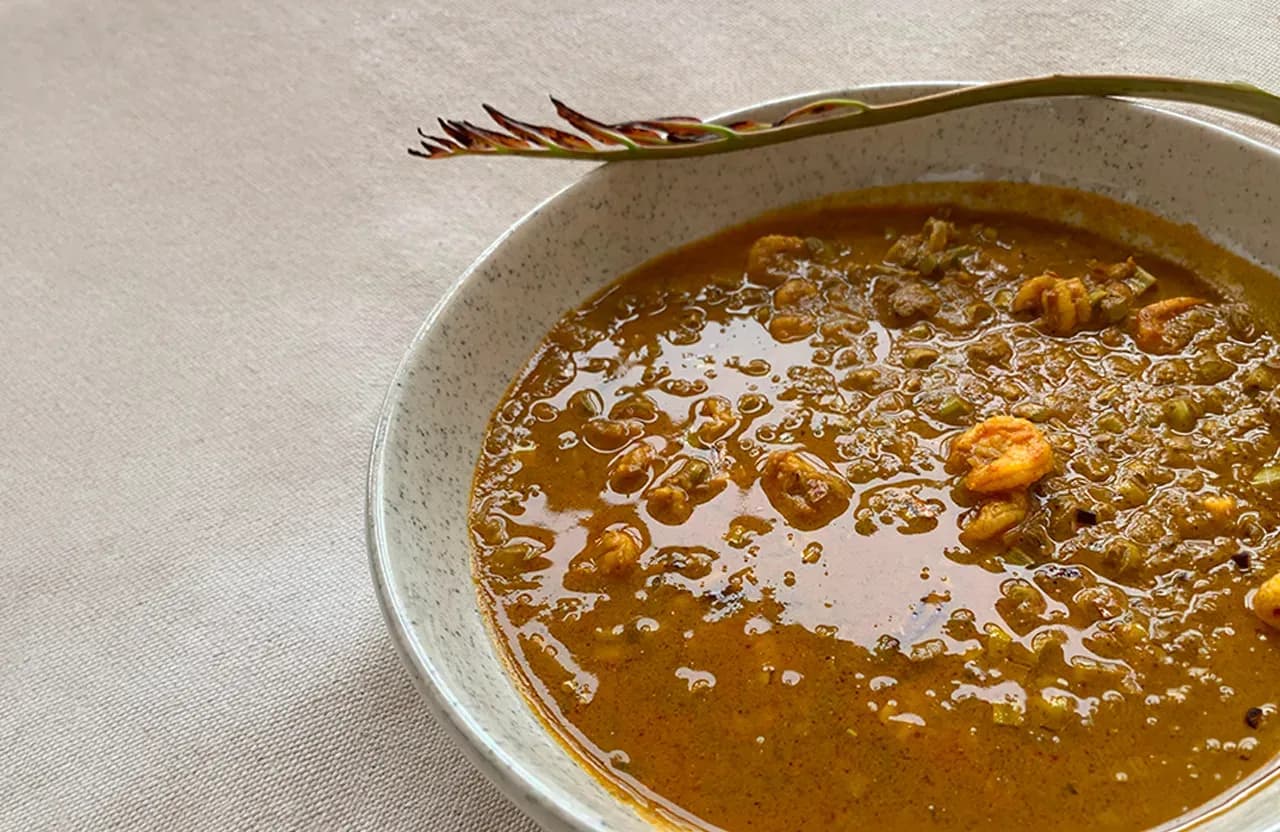
Food historian Odette Mascarenhas adds a further, more surprising layer on which community eats Aakur and how it tracks closely with religion, not just geography. “The Catholic community doesn't use this monsoon vegetable, or weed,” she says, “because certain varieties are considered (and I'm using a strong word here) slightly poisonous, so they're not entirely comfortable with it. It is used in the Hindu community, both in GSB [Gaud Saraswat Brahmin] households and restaurants, as well as more broadly in Hindu-centric kitchens.” There it becomes Aakur tonak, giving the dish a distinctive sweet-and-spicy character, sometimes finished with dried rather than fresh prawns.
Whose harvest is it?
Rural Goa outside its cities remains largely feudal and caste-structured, particularly among Hindu communities, a structure that shaped who foraged and why. Lower-caste households, historically excluded from cash income, lived off the land: yams, Aakur, colocasia stems, snails, frogs, and mushrooms were simply what was eaten, out of necessity rather than preference. Upper-caste households, with money to spend at markets, had no need to learn this knowledge at all. Access to Aakur, in other words, was never really about the plant's abundance, but about who had a reason to go looking for it.
That dynamic is shifting, though not cleanly. Younger members of foraging communities are moving into salaried service jobs, earning cash income for the first time, while their parents continue to forage, now increasingly to sell rather than simply to share. Hansel's own house-help forages occasionally; her niece does so more regularly, turning a half-hour trip into the marsh into a few hundred rupees, enough to buy fish for the day. It's a small, closed loop of an economy: a bundle of fern traded for the price of a mackerel.
An easy plant, a harder habitat
Not every foraged monsoon green is this resilient. Shubhra mentions eka panachi bhaji, a Cotigao green so localised and slow-growing that each root produces exactly one leaf per season and never makes its way to the markets. Aakur, by contrast, is easier to forage. Once you know the stretch of riverbank, the harvest is sustainable almost by design, since only the tip is taken and the plant regrows quickly enough to be picked again within the week.
The real threat to Aakur isn't overharvesting at all. It's sand. Illegal sand mining, driven by Goa's ongoing construction boom, has eroded stretches of riverbank across the state, in some cases collapsing them outright. The Kushavati has fared comparatively well, still largely undisturbed, which may be part of why it remains a dependable source. Where Aakur does seem to be thinning out elsewhere, the cause appears to trace not to the plant, but to what's happening to the ground it grows on.
What gets passed down, and what doesn't
Hansel's own foraging knowledge began the ordinary way: summers in an ancestral village, no television, no internet, and an abundance of unstructured time spent figuring out, alongside other children, what could and couldn't be eaten or touched. It's knowledge that resists being written down: which flowers smell wrong, which stems itch, which shoots are a week past their moment, learned by repetition, alongside people who already knew.
That knowledge is what's actually under pressure, more than the plant itself. As foraging has shifted from subsistence, to communal sharing, to a modest cash trade, and as the people who once foraged from necessity move into salaried work, fewer people are walking the khazans and riverbanks at all. Aakur has become harder to find only because fewer people are looking for it.
A bundle of fern traded for the price of a mackerel.
Source: Reported along the Kushavati, South Goa, with Hansel Vaz, Shubhra Shankhwalker and Odette Mascarenhas.