Faith & History
An ‘Altar’nate View of Colaba
A lifelong Colaba resident wanders her neighbourhood's churches — Baptist, Methodist, Scots' Kirk, a 300-year-old Anglican cathedral — and discovers that her quietest sanctuary was, for a century, a piece of Goa.
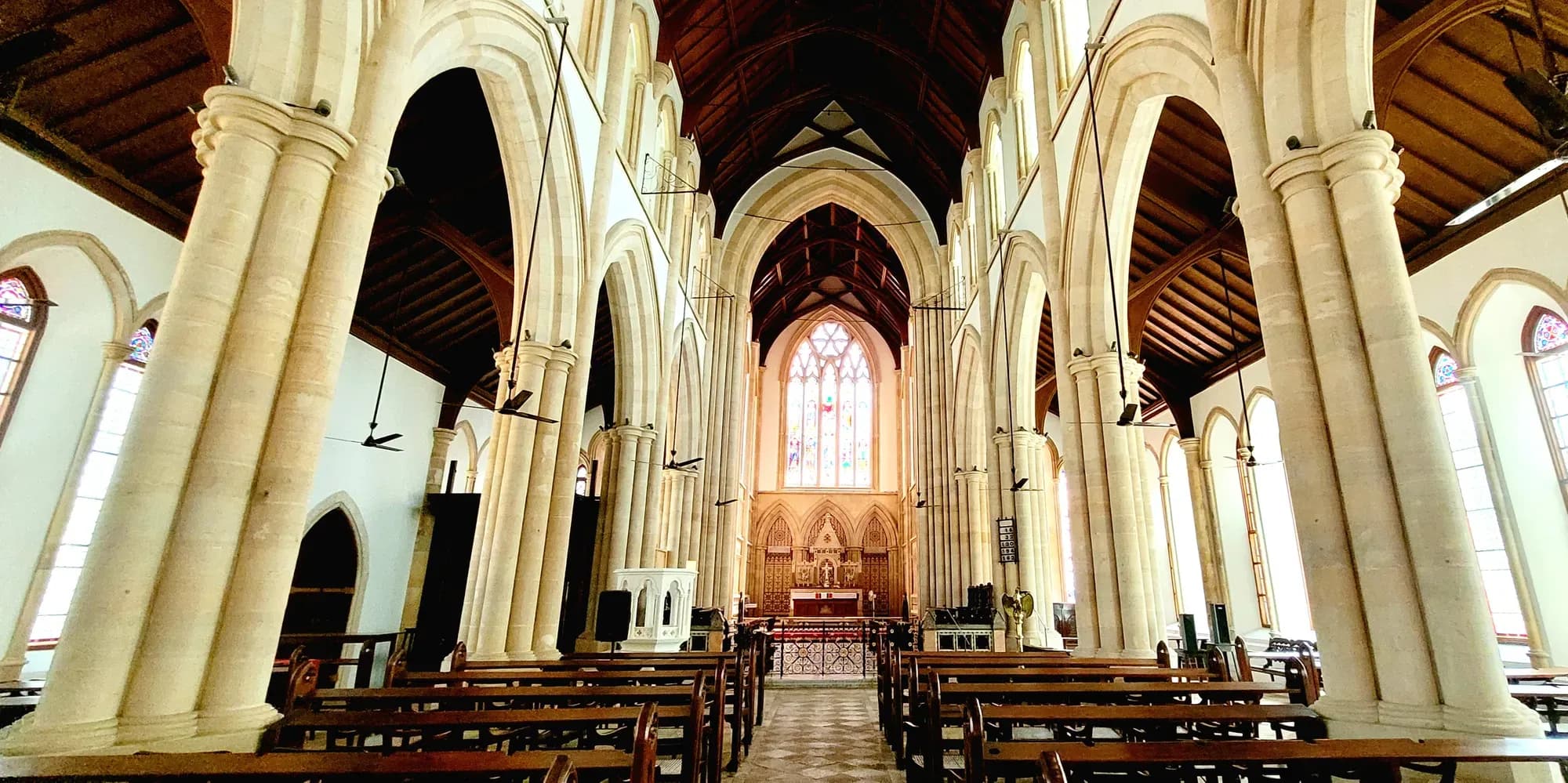
I’ve grown up in Colaba, a microcosm of Mumbai that’s rather rich in churches. Right opposite my home is the much-bougainvilleaed Bombay Baptist Church. From my living room window, I can see the steeple of the Anglican Afghan Church, a beautiful neo-gothic structure with stunning stained glass that is dedicated to St John the Evangelist. It’s been painstakingly restored in recent times and even had a resurgence of interest from the city thanks to the light show and projection mapping in its interiors by the Floating Canvas Company during the Mumbai Light Festival’s ‘Ascension’ concept.
Roman Catholic churches include the Blessed Sacrament, St Joseph’s, and the Cathedral of the Holy Name (both with schools attached). I’ve spent so many Christmas Eves attending the mass and listening to the soulful carols sung in the latter. Then there are those of other denominations, such as the Wesleyan Methodist Chapel and the Bowen Memorial Methodist Church, that I’ve stopped by, drawn by the peace in the midst of the chaos of Colaba Causeway.
In all my wanderings around town, I discovered that the Presbyterian Church of St Andrew and St Columba comprise two separate buildings. The lofty St Columba at Fort works with homeless street children, but it’s the Greek Revival style and the unique blue cross of the Scots’ Kirk at Kala Ghoda that truly catches the eye. That, and the colourful stories around it. How it was conveniently located right next to the round icehouse that once existed in the neighbouring plot (where the KR Cama Oriental Institute is now located) and how it was one of the largest customers for the ice blocks shipped halfway around the world from the American Great Lakes. Not, as many conjecture, to plop into glasses of Scotch, but to actually cool down the church premises to entice more of the expat Scotsmen stationed in Mumbai to attend services!
St Thomas Cathedral is another Anglican stunner and one that dates back more than 300 years to 1718 AD. It used to be inside the erstwhile British fort and was also considered the ‘zero point’ of Bombay, the spot from where all the milestones were measured. They say that its steeple was the tallest structure in the city and one that helped sailors confirm that they had reached Mumbai. With memorials and plaques lining its walls, the cathedral is a reminder of all the people who contributed to Bombay in many ways, their names still reflected in many of the roads, railway stations, and other places we are familiar with even now.
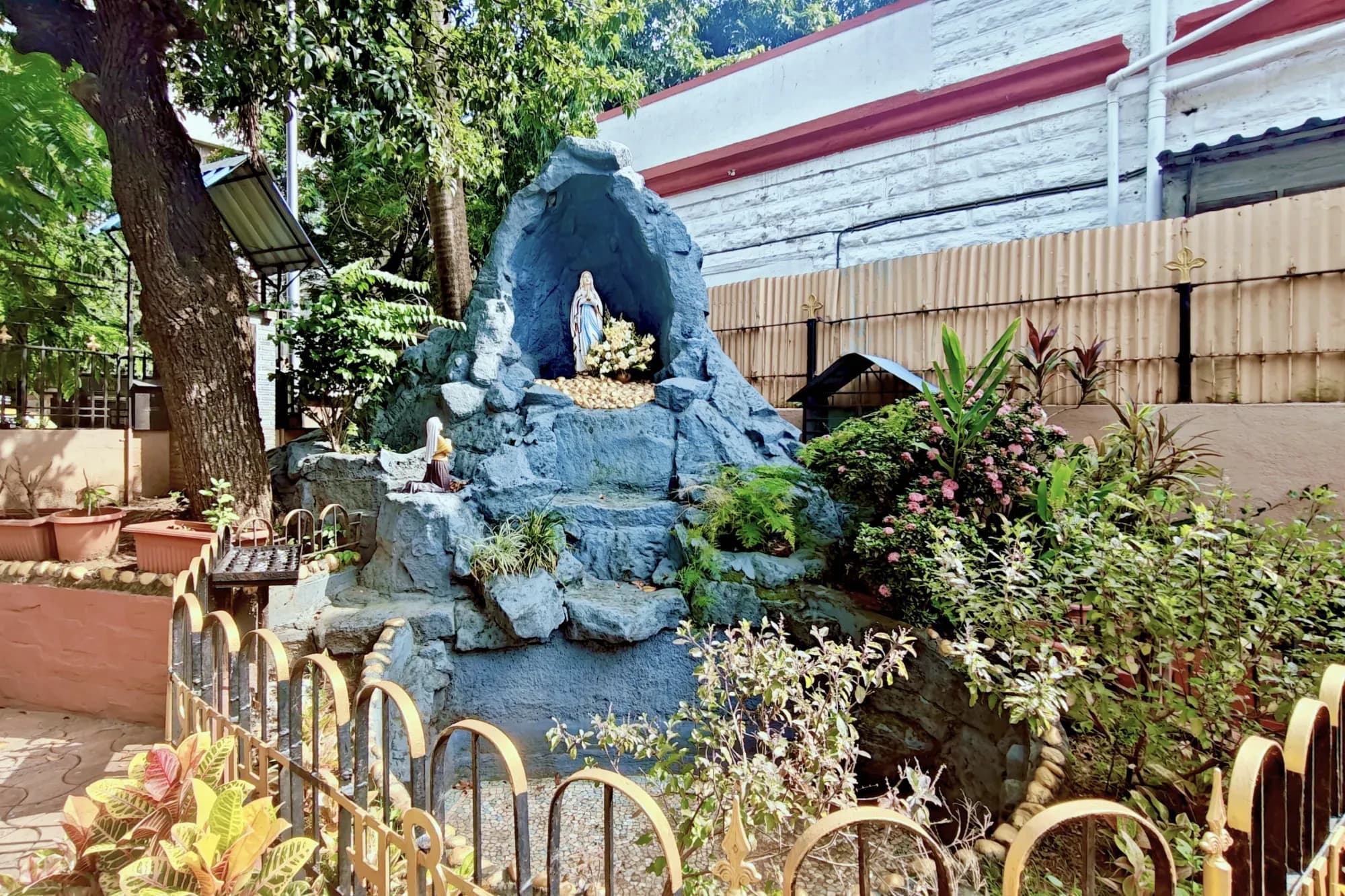
Most of these buildings are well preserved and worth visiting, even if, like me, you’re neither Christian, nor religious. It’s enough to worship history, architecture, and atmosphere. Each of these, all to be found within a five-km radius around my home, has something fascinating about it. But the one that truly takes the cake is the one that has casually been a part of my childhood. On my way home from school, I used to stop by its little grotto to gaze at the serene face of Mother Mary, enjoy the sound of the trickling water, and pat a few friendly cats. It was just a personal ritual that transcended any religious leanings. The practice continued well into adulthood, until they installed a large metal gate and a watchman on a stool at the entrance.
A delicious discovery
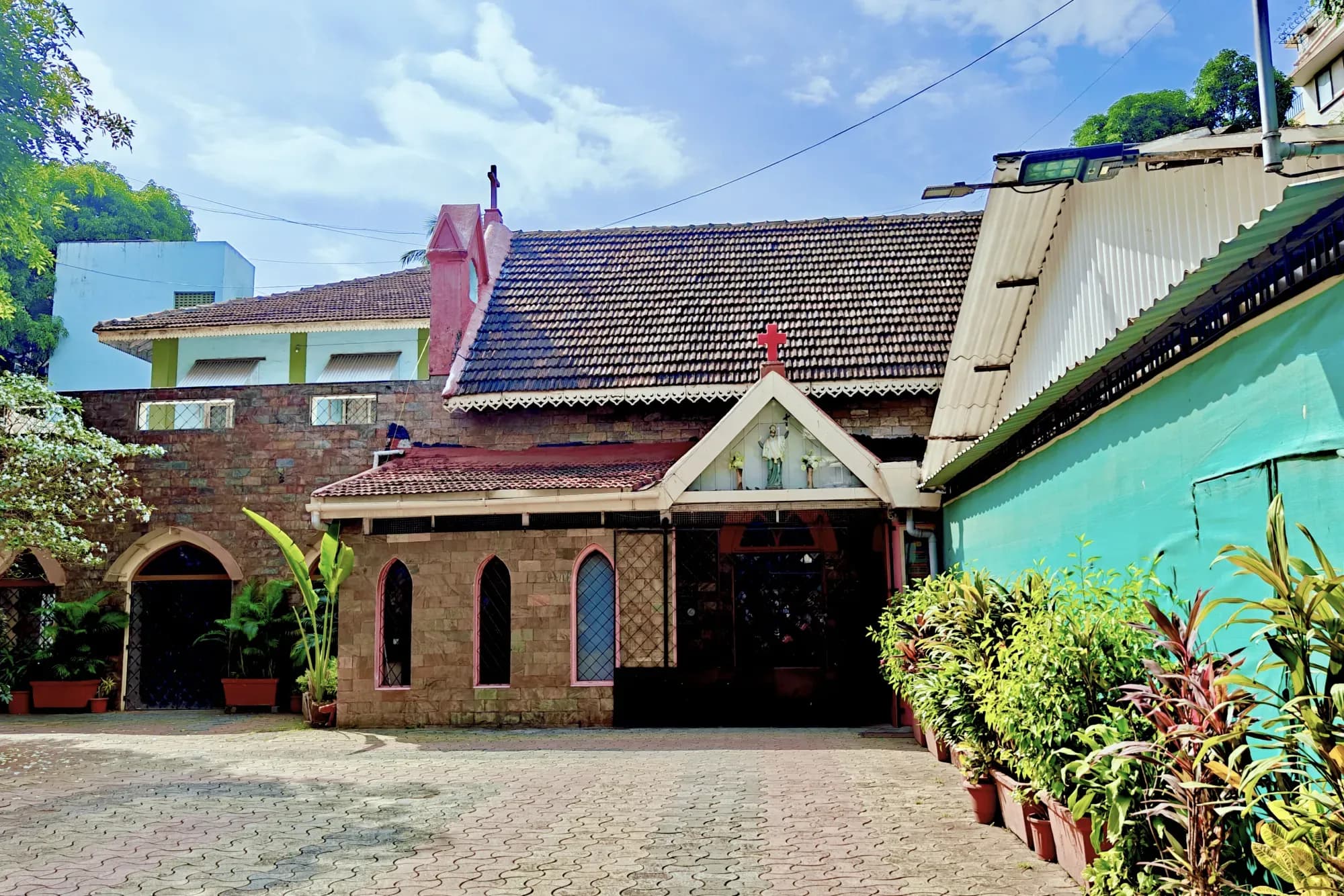
I may not go there as often now, but I’m pleased that I’ve found something about it that very few others are aware of. Called the St Francis Xavier’s Chapel or the Blessed Sacrament Church, it was one that the Portuguese kept back for themselves when famously giving away the seven islands of Bombay as part of their Princess Catherine’s dowry when she married King Charles II of England in 1661 AD! So, while the rest of the island city belonged to the British, this church and the tiny island of Little Colaba surrounding it, continued to be Portuguese territory for another century, until about 1762 AD. With a bit of research, I found that what began as the Hospice of the Augustinian Fathers, a resthouse for missionaries en route to other parts of India, later became the residence of the Bishop of Daman, leased to the Diocese of Daman by the Portuguese Government of Goa.
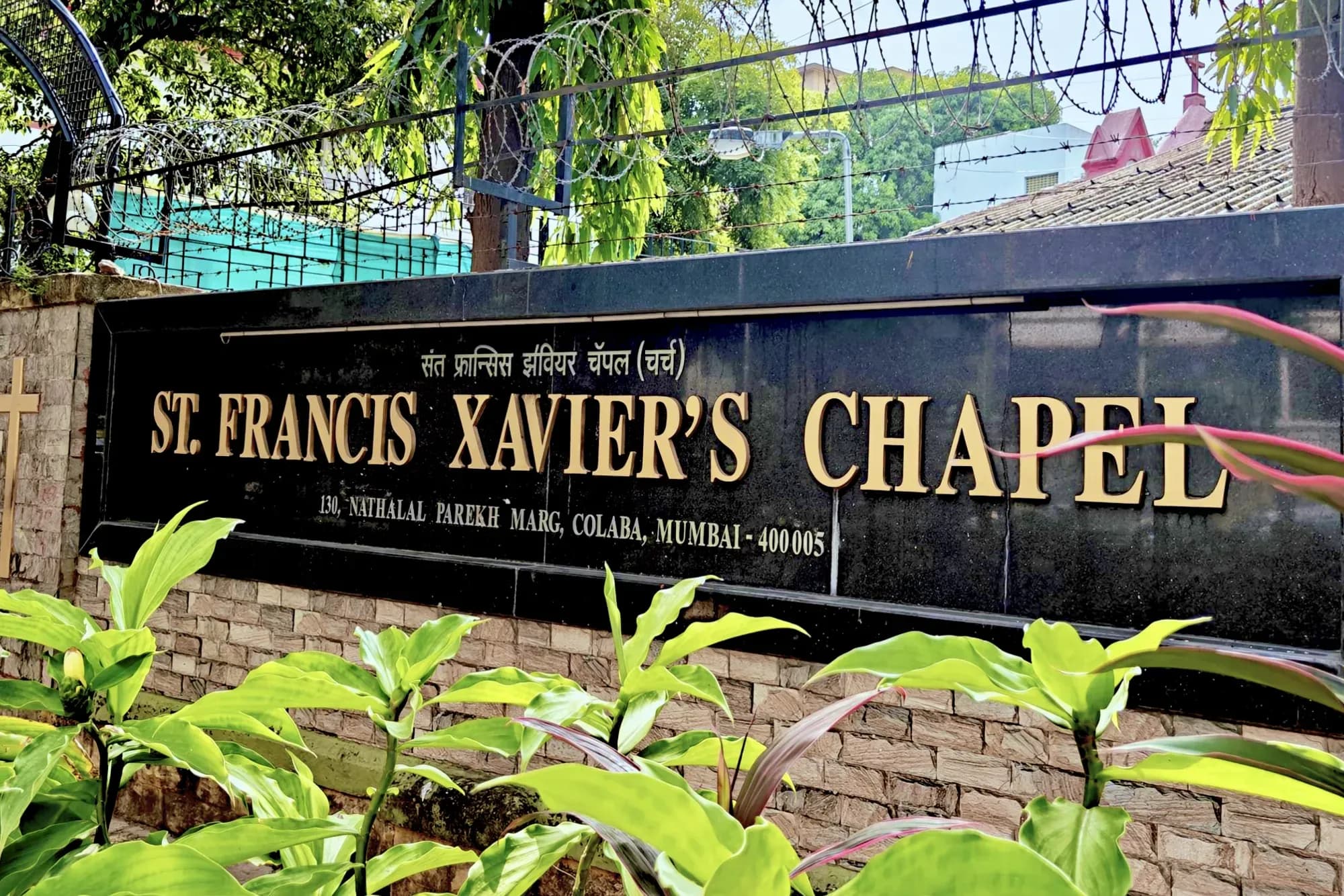
Turns out, my quiet neighbourhood space, with exactly the kind of serenity Mumbaikars seek in Goa, was actually a part of Goa. Who would have thought?!
My quiet neighbourhood space, with exactly the kind of serenity Mumbaikars seek in Goa, was actually a part of Goa.
Source: Written from Colaba, South Bombay.