Streets & Belonging
Chapel Road: Where Walls Remember Stories
A 0.32-kilometre lane in Bandra where eighteen crosses, older Koli histories and a new café economy press up against the people who still call it home.
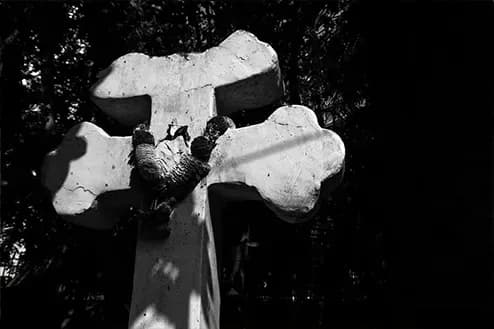
There are parts of Bombay that are difficult to understand from a map. Chapel Road is one of them. It is only about 0.32 kilometres long, but the road keeps opening into smaller lanes, houses, shops and corners that make it feel much larger than it is. Cars move carefully through the narrower stretches, sometimes with only enough room for one to pass. People stop to speak, work from their homes and shops, and continue with routines that have shaped the neighbourhood for generations.
The journey into the gaothan
Chapel Road was originally known as Colaria Grande, a Koliwada inhabited by Kolis, the fisher-folk who lived along the coastal areas of Maharashtra. The neighbourhood that exists today carries traces of several histories that have accumulated over this older settlement. Catholic traditions are visible in the crosses that appear throughout the road and its lanes. There are 18 crosses along the main stretch, with several more inside the smaller lanes. Some date back to the late 1700s. Around 150 crosses across Bandra and along Chapel Road were erected during the plague epidemic between 1896 and 1908. Many are still decorated and prayed at by the people who live around them.
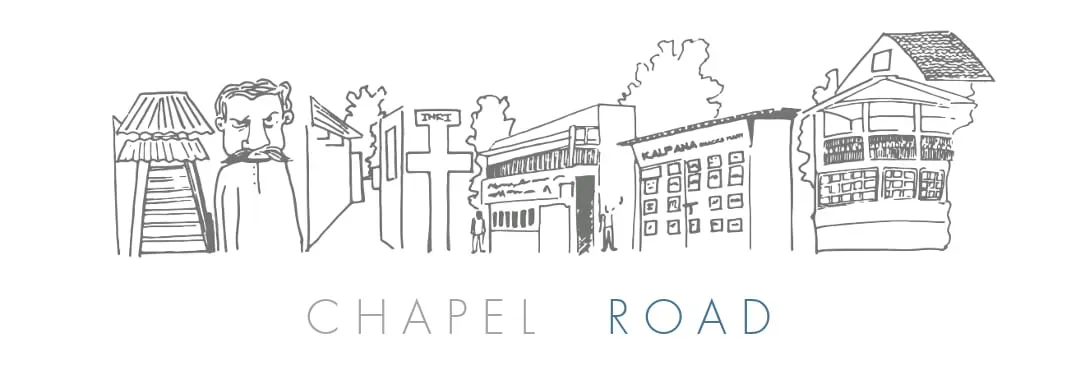
Even the name Chapel Road has more than one explanation. Some residents associate it with the road leading towards a nearby church, while others connect it to the many crosses found throughout the neighbourhood. These different explanations are part of what makes the place difficult to reduce to a single history. Chapel Road is a gaothan, but it is also a neighbourhood shaped by Catholic traditions, older Koli histories, different languages, food, commerce, art and generations of people living close to one another.
To understand it, you have to enter it slowly. The street does not reveal itself all at once.
Houses that remember
Walking further into Chapel Road, the houses begin to tell another part of its story. Most of the older structures are one or two levels, with influences from Portuguese, British and Indian architecture. Many were built during the early and middle decades of the twentieth century. Mangalore-tiled roofs, cast-iron grills and railings, wooden supports, glass and stained-glass panels appear across the street, each with its own small variations.
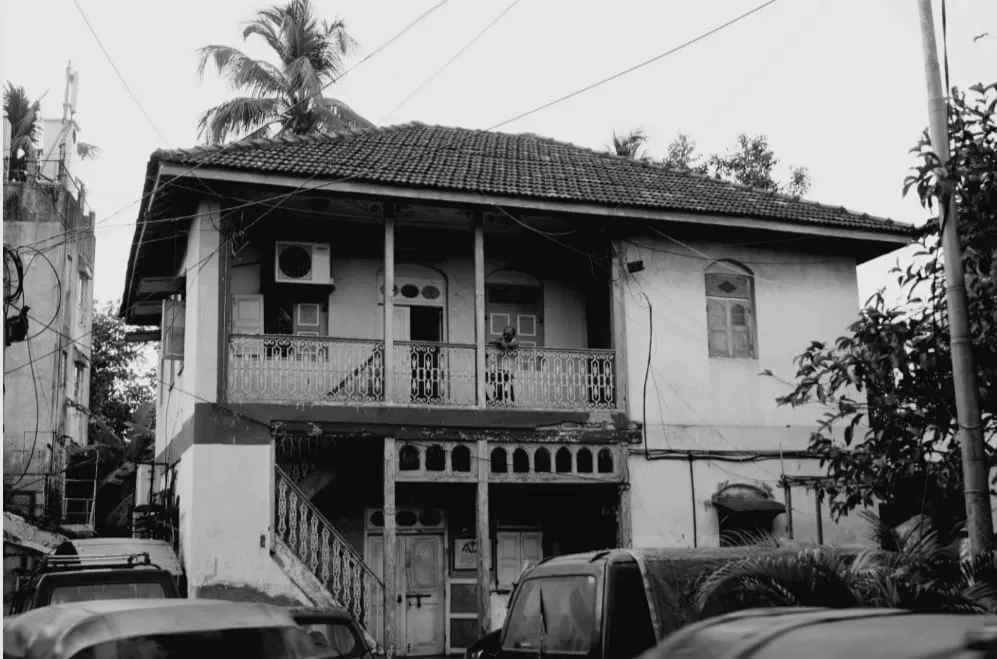
These houses were never simply architectural objects. They were homes. Their doors opened onto the street. Their balconies looked into lanes where neighbours knew one another. Shops and businesses existed alongside domestic spaces. The boundary between private and public life was not always sharply drawn. This is part of the character of a gaothan. Community happens at close range.
The street has never been completely still. Development has continued around the older structures. New additions have appeared, buildings have grown into available spaces, and newer construction has begun moving deeper into the settlement. Different periods now exist beside one another.
In the past few years, however, the change has become more visible. Some older houses and spaces have been altered or converted into cafés and other commercial spaces. The arrival of cafés has brought a new kind of activity into the lanes. Places that were once primarily residential are increasingly becoming destinations.
There is nothing inherently wrong with a neighbourhood changing. Bombay has always changed through movement, adaptation and reinvention. The question is what happens when the things that made a neighbourhood distinctive become the very things that begin attracting people to it.
Look closer
The longer you spend on Chapel Road, the more the surfaces begin to matter. Walls are painted, repainted, weathered and marked. Graffiti sits beside old plaster. Wood meets masonry. Small grooves, cracks, patterns and changes in material become visible once you stop looking at the street only from a distance. Weather changes them, light falls differently across them, and years of use leave behind marks that are easy to miss while simply passing through.
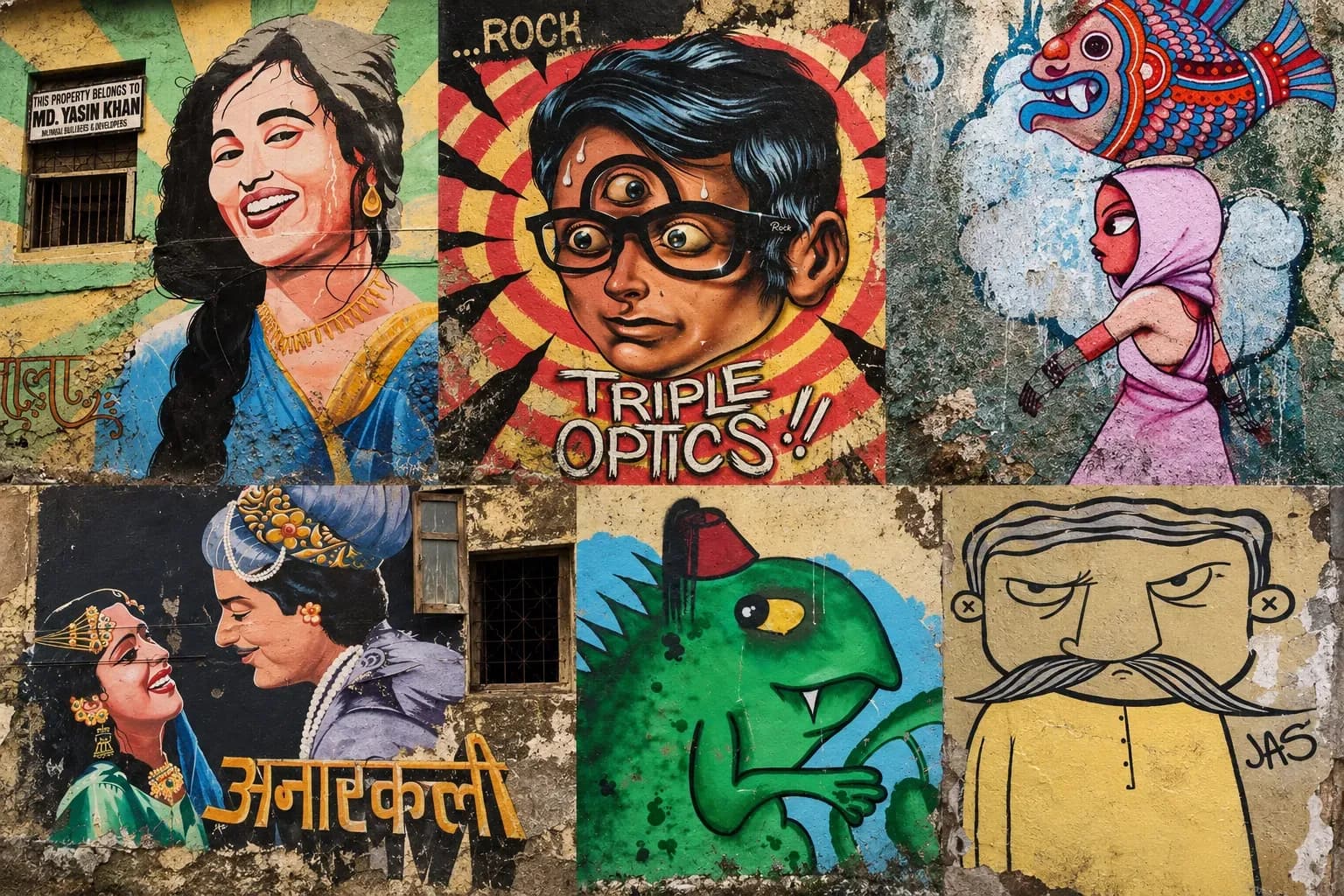
Art has become an important part of the visual identity of Chapel Road. Walls and buildings carry graffiti, portraits, posters and other forms of expression. The older documentation of the neighbourhood notes that both local residents and people from outside the area have contributed to this changing layer of art. Walls are sometimes repainted, allowing one piece of work to disappear while another takes its place.
Colour becomes another way of reading the street. Blue, red, faded plaster, painted metal, wood, moss and weathered surfaces all become part of its visual character. A wall can change simply because of rain. A painted surface becomes softer with age. A piece of graffiti sits against an older façade and creates an accidental combination that could never have been planned.
These details are part of what made Chapel Road distinctive. They also helped make it visible. Photographs of old houses, painted walls, cafés and narrow lanes began circulating far beyond the neighbourhood. Chapel Road became a place people wanted to visit, photograph and share. The street started acquiring another identity, one that existed not only for its residents but also through the images being made of it.
There is a difference between looking at a place and treating it as a backdrop. A wall can be photographed. A house can be admired. A cross can be documented. But behind each of these things is someone who lives there, works there or has lived alongside it for years. When a neighbourhood becomes an image, it becomes easy to forget the people who exist outside the frame.
The people between the buildings
Chapel Road is not held together by its architecture alone. Much of its character comes from what happens between the buildings. Small businesses, shops, food establishments and services support the everyday life of the neighbourhood. The street has historically accommodated a mix of activities, from food and clothing to smaller services and businesses that support the surrounding community.
Food is particularly visible. People come to Chapel Road for familiar and affordable things to eat, and some establishments have become part of the identity of the street itself. Kalpana Snacks Mart is one such place, known for its fugias and potato chops and often selling out before closing.
This is where the culture of Chapel Road becomes less about what can be photographed and more about what is lived. Food, faith, language, work and community exist together. Different religions and languages share the same settlement. Younger and older residents remain part of communal life. Shops depend on the people around them, while residents depend on the network of places and people that make everyday life possible. The residents have a simple way of describing this feeling: you are never alone.
That feeling is becoming harder to hold on to. As Chapel Road has become more visible, the number of visitors has increased. Tourists, photographers and Instagram influencers come looking for the old houses, cafés and graffiti that have made the neighbourhood recognisable online. For the people who live there, this attention does not always feel harmless.
Visitors sometimes photograph residents or their homes without asking. Groups gather in front of houses. Conversations become loud. People occupy narrow lanes and entrances for photographs. Some stay longer than they should in spaces that are still someone's everyday surroundings. The problem is not that people are interested in Chapel Road. The problem is what happens when interest stops being respectful.
The intimacy that made Chapel Road interesting is also what makes the attention intrusive. A lane that was once simply a lane becomes a photograph. A house becomes a backdrop. A resident becomes part of somebody else's content without ever agreeing to be in it.
What stays with you
Chapel Road is changing, and change itself is not necessarily the problem. Streets grow, businesses come and go, buildings are repaired or replaced, and neighbourhoods find new ways to survive. What feels more fragile is the relationship between the place and the people who have always lived there.
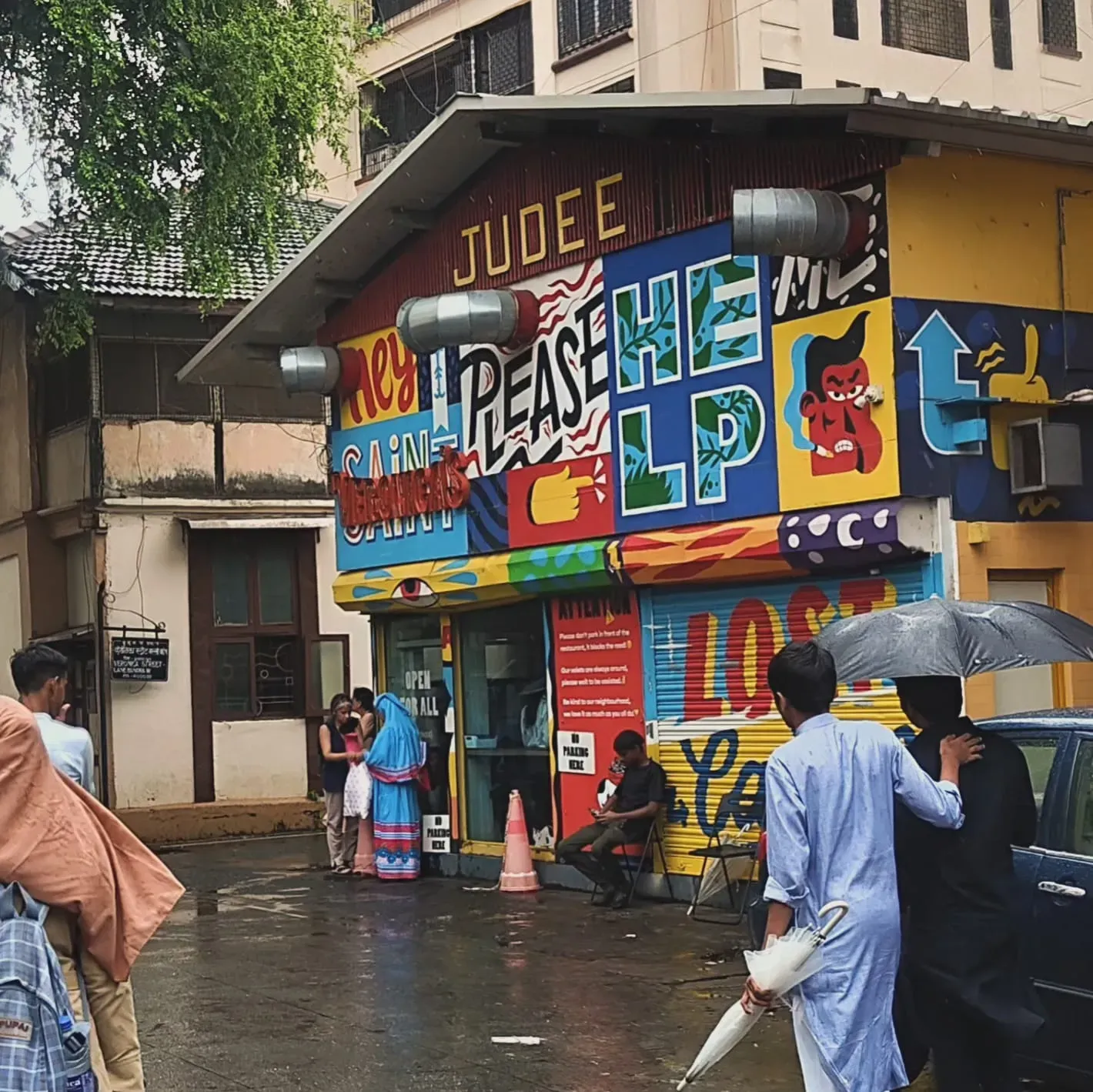
When cafés replace old homes, when graffiti becomes a tourist attraction, and when houses become backdrops for photographs, the street can slowly begin performing the image that has been created of it. The old house remains, but it exists for the photograph. The graffiti remains, but it becomes an attraction. The gaothan remains, but the people who make it a gaothan have less room to simply live in it.
There is a strange contradiction here. The things that brought attention to Chapel Road are real parts of the neighbourhood. The old houses are real. The crosses are real. The food, graffiti, cafés and narrow lanes are real. But once these things become attractions, they can begin to separate from the lives that gave them meaning.
A neighbourhood can be appreciated without being consumed. That distinction matters. Chapel Road does not need to remain frozen in the past to retain its character. It can have cafés. It can have new buildings. It can have art. It can change. But the people who live there should not have to become background characters in the process.
Perhaps that is what is most important to remember about Chapel Road. It was never interesting simply because it looked old. It was interesting because it was lived in. Its history remains visible in the crosses and houses. Its culture continues through food, faith, language, work and community. Its present is visible in the cafés, graffiti and changing streetscape. But somewhere between preservation and reinvention is a question the neighbourhood is now having to live with: how do you keep a place alive without turning it into a performance of itself?
Chapel Road is a small part of Bombay. It can be photographed, visited and admired. But beneath all of that, it is still a neighbourhood. People still live behind those doors. People still work in those shops. People still know their neighbours. You can walk through it quickly. But to understand it, you have to slow down, look beyond the photograph, and remember that this is still someone's home.
A neighbourhood can be appreciated without being consumed.
Source: Reported on Chapel Road, Bandra West, Bombay.